
Using AI to Automate AE Admin Work
AEs Aren't Closing Because They're Doing Admin
Account Executives are hired to run deals, build relationships, and close revenue. Instead, they spend most of their week preparing to sell — researching accounts, mapping stakeholders, prepping for calls, building decks, writing emails, updating the CRM, and reporting internally.
The work is different from SDR admin. It's more complex, more strategic, and higher-stakes. An SDR's admin costs prospecting time. An AE's admin costs deal velocity. Every hour an AE spends building a business case from scratch or manually mapping an org chart is an hour not spent in front of a buyer advancing the deal.
AI can automate this layer. Not the deal strategy — that requires judgment, relationships, and experience. But the preparation, synthesis, and maintenance that surrounds every deal? That's exactly what AI is built for.
Here are the seven admin tasks that consume the most AE time, how AI can handle each one, and what to watch out for.
1. Account Planning and Strategy Development
The problem: AEs build account plans manually. They pull data from the CRM, research the company, check for recent news, identify stakeholders, and try to synthesize it into a strategic plan. The plan takes days to build and starts decaying immediately.
What AI can automate:
- Continuous monitoring of account-level changes (leadership, strategy, financials, competition)
- Synthesis of raw information into strategic implications
- Identification of triggers that create new selling opportunities
- Maintenance of living account context that updates without manual effort
What to look for: AI that doesn't just present information but evaluates it against your specific deal and selling motion. A leadership change means something different depending on what you sell. The system needs to know your context.
The trap: Tools that generate static account plans on demand. A plan built once is stale within weeks. What you need is living account intelligence that updates continuously — so the plan is always current without being rebuilt.
2. Stakeholder Mapping and Buying Committee Analysis
The problem: AEs manually piece together org structures. They ask champions for names. They search LinkedIn. They build spreadsheets of stakeholders. They guess at reporting lines. They discover gaps in coverage three months into a deal when it's too late to multi-thread.
What AI can automate:
- Discovery of stakeholders at the right seniority levels across multiple data sources
- Enrichment of contact information (email, phone, LinkedIn) through waterfall providers
- Visualization of org structure and reporting lines
- Identification of coverage gaps before they become deal risks
What to look for: A system that connects contact discovery to account context. Finding names is step one — understanding who influences the deal, who has budget authority, and where your coverage is thin is what actually matters.
The trap: Tools that find contacts in isolation. If your contact enrichment system doesn't connect to your account research system, you still need to manually figure out which contacts are relevant to your deal and why. The data is useful; the disconnection is not.
3. Call Preparation and Meeting Readiness
The problem: Before every customer call, AEs research the account, review the history, check for recent news, look at the contact's background, and try to form a point of view. With 4–6 calls a day and 20+ active accounts, this is 1–2 hours of prep daily.
What AI can automate:
- Maintenance of account context between conversations so prep isn't starting over each time
- Synthesis of recent signals and alerts into a pre-call brief
- Contact context that reminds you who you're meeting and what they care about
- Identification of what changed since the last conversation
What to look for: AI that maintains context continuously, not on demand. If you have to ask the system for a brief before every call, that's still a manual step. The best approach: context is maintained in the background, and you just open the account when you need it.
The trap: Tools that require you to prompt them before every meeting. "Generate a call brief for my 10 AM" sounds helpful, but it means you're still doing admin work — you've just moved it from research to prompt engineering. The system should maintain readiness without being asked.
4. Email and Outreach Personalization
The problem: AEs write personalized emails to multiple stakeholders at every account. Each needs a different angle based on their role, seniority, and concerns. The CTO cares about architecture. The CFO cares about cost. The VP of Ops cares about efficiency. Writing unique, researched emails to each one takes significant time.
What AI can automate:
- Drafting personalized emails grounded in account research
- Varying the angle based on the contact's role and concerns
- Adapting tone and style to match how the AE writes
- Referencing specific triggers and context rather than generic templates
What to look for: Draft generation that understands both account-level context and contact-level context simultaneously. The email to the CTO and the email to the CFO reference the same account event but position it differently based on who's reading it.
The trap: Template-based personalization (merge fields, company name insertion, role-based snippets). Buyers see through this instantly. Real personalization means the email references something specific and current about the account — not just the person's name and title.
5. Pipeline Updates and CRM Maintenance
The problem: After every call, AEs update the CRM — stage, close date, amount, next steps, notes. They update the forecast. They answer manager questions about what changed. This administrative overhead exists to serve reporting, not selling, and it comes directly out of selling time.
What AI can automate:
- Maintaining account context from research and signal monitoring
- Updating account intelligence as new information arrives
- Creating an audit trail of account changes through alerts and triggers
- Providing visibility into what changed without manual data entry
What to look for: Systems that maintain CRM-relevant context as a byproduct of the work the AE is already doing. If the account research updates automatically and alerts fire when things change, the information that matters for pipeline decisions is already captured — without the rep stopping to type it in.
The trap: Tools that automate CRM field entry by watching calls or emails and filling in fields. This solves the symptom (empty fields) without solving the problem (stale context). Fields filled by inference are often wrong. What you actually need is accurate account intelligence maintained by the system — not best-guess autofill.
6. Deal Material Generation
The problem: AEs build executive summaries, business cases, mutual action plans, competitive positioning docs, and QBR materials. Each starts from a blank page. Each takes hours. Each draws on account context the AE carries in their head.
What AI can automate:
- Generating deal materials grounded in account research and contact context
- Producing shareable content (landing pages, one-pagers, recap videos) from account intelligence
- Adapting materials to different stakeholders and use cases
- Updating materials as account context changes
What to look for: Generation that's grounded in real account data, not generic templates. A business case should reference the specific triggers, stakeholders, and strategic context of the deal — not a fill-in-the-blank template that every prospect gets.
The trap: Document automation that produces generic output. If your "personalized" business case reads the same for every account except the company name, buyers notice. The value is in specificity — materials that prove you understand the account, not just that you have a template.
7. Internal Reporting and Deal Reviews
The problem: AEs spend time preparing for internal meetings. They build pipeline updates for managers. They prepare deal review summaries. They put together territory reports. This work serves internal stakeholders, not buyers — but it still takes significant time.
What AI can automate:
- Summarizing account activity and signals for internal reporting
- Generating deal summaries from maintained account context
- Providing timeline views of what changed and when
- Synthesizing territory-level patterns from individual account signals
What to look for: A system where the intelligence maintained for selling also serves reporting without additional work. If account signals, contacts, and triggers are already tracked, a deal review summary should be generated from that data — not rebuilt from rep memory.
The trap: Tools that create a separate reporting workflow. If the AE has to do one set of work to sell and a different set of work to report, the admin burden doubles. The best systems make reporting a view of the same data that drives execution.
The Integration Problem
The pattern across all seven tasks is the same: context exists, but it's scattered across systems, conversations, and the AE's memory. The admin work is mostly synthesis — pulling together information that already exists and packaging it for a specific use.
Most teams try to solve this with point solutions:
- A research tool for account planning
- An enrichment tool for contacts
- A scheduling tool for call prep
- An email tool for outreach
- A CRM for pipeline
- A content tool for materials
- A dashboard for reporting
Seven tools. Seven logins. Seven data models. And the AE becomes the integration layer — copying context between systems, maintaining awareness across platforms, and spending admin time that now includes managing the tools.
The answer isn't better individual tools. It's a single system where context flows between capabilities without the AE managing the connections.
What to Avoid: The "Full Automation" Trap
Some tools promise to automate the AE entirely — closing deals, running conversations, making strategic decisions with AI agents.
This is the wrong direction for enterprise sales.
Enterprise deals require:
- Relationship judgment that comes from experience
- Political navigation that requires reading people
- Creative positioning that adapts to real-time conversation
- Trust that only humans build with other humans
AI should automate the preparation and maintenance layer so AEs can spend more time on these human skills — not replace those skills with automation.
The right line:
Automate: Research, enrichment, monitoring, drafting, synthesis, and data maintenance.
Keep human: Strategy, positioning, relationship building, negotiation, and judgment calls about timing, messaging, and approach.
How ChatAE Automates AE Admin in One Platform
ChatAE handles all seven administrative tasks in a single system — connected, context-aware, and designed for sellers, not engineers.
Living account intelligence. Research runs against your triggers and maintains account context continuously. Every insight is evaluated against your deal — not just presented as raw information.
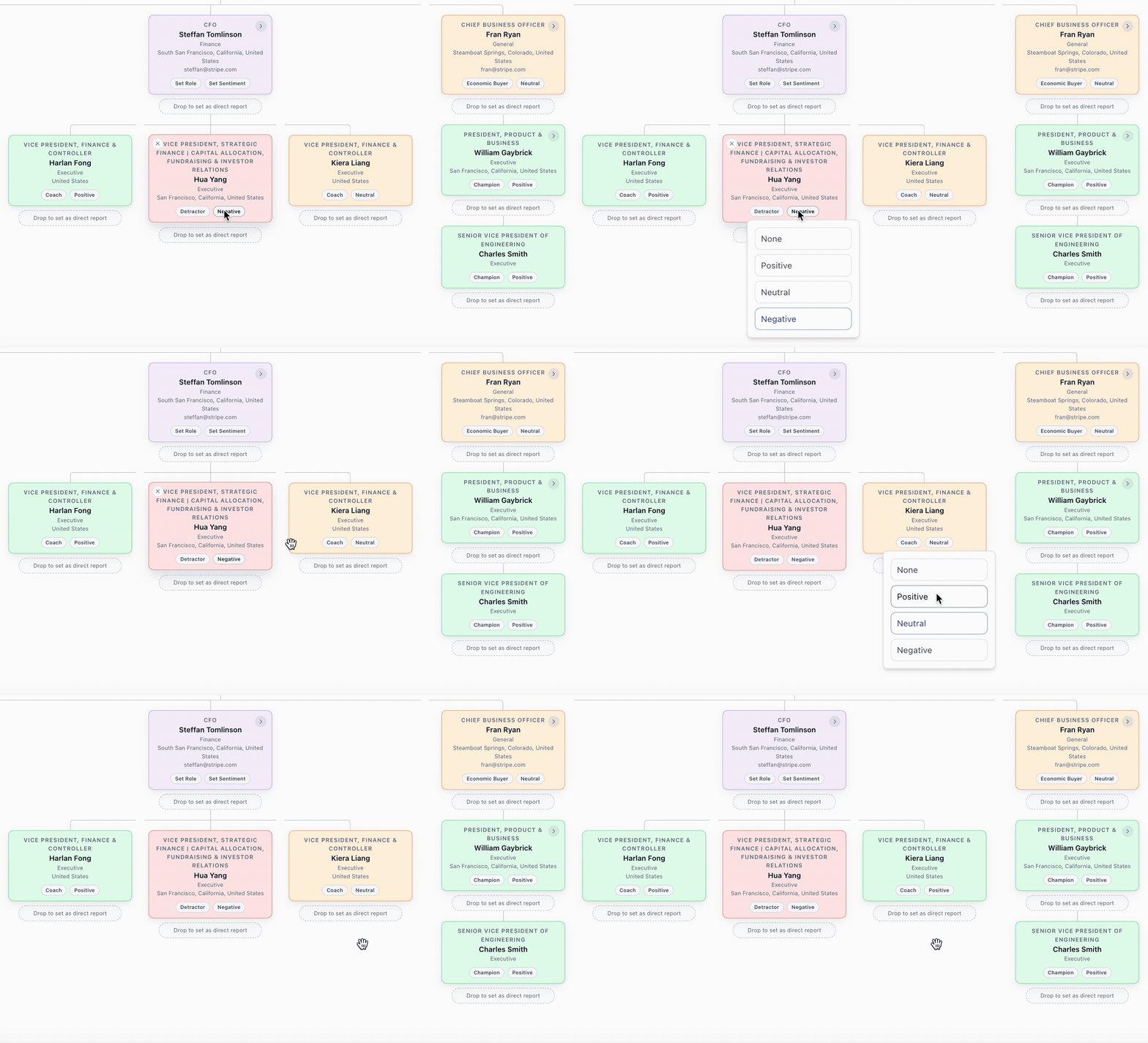
Stakeholder mapping with enrichment built in. Find contacts, build org charts, and identify coverage gaps from one place. Waterfall enrichment across multiple providers means you're not limited to a single data source.
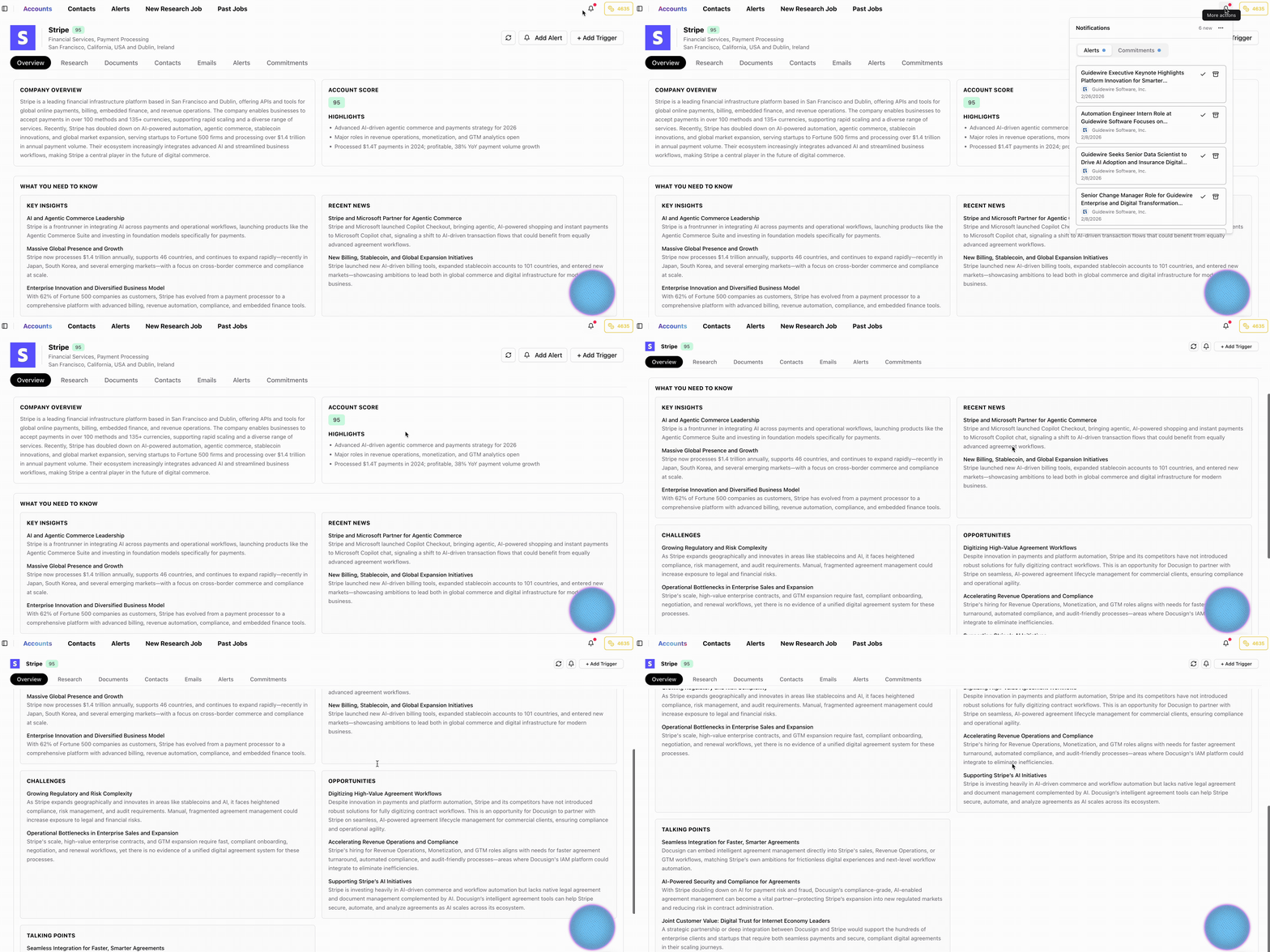
Continuous call readiness. Account context is maintained between conversations. You don't prep — you open the account and the brief is there. Signals, alerts, and contact context are always current.
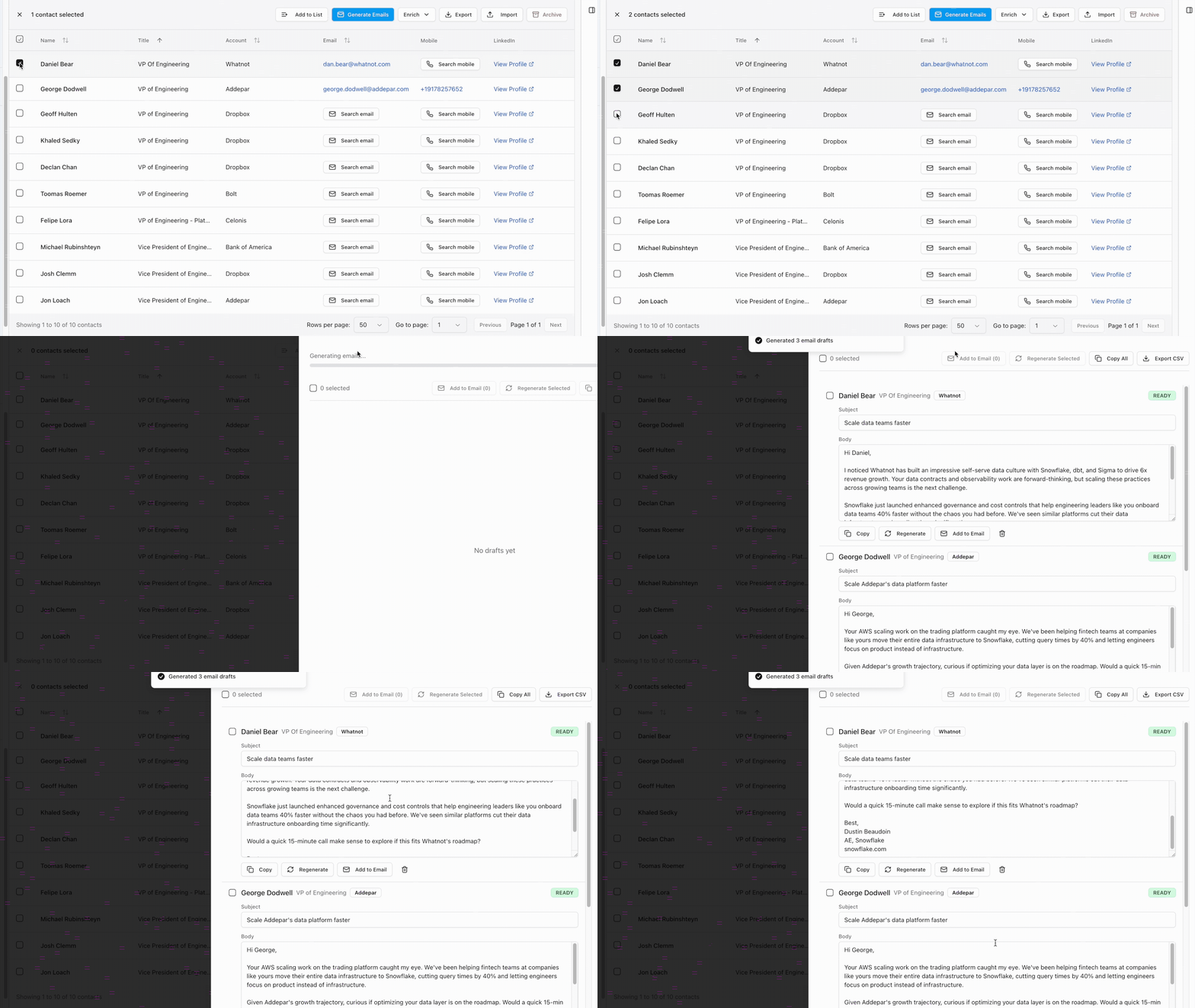
Multi-stakeholder outreach in minutes. Generate personalized emails for different stakeholders at the same account — each grounded in the same research but angled for the person receiving it.
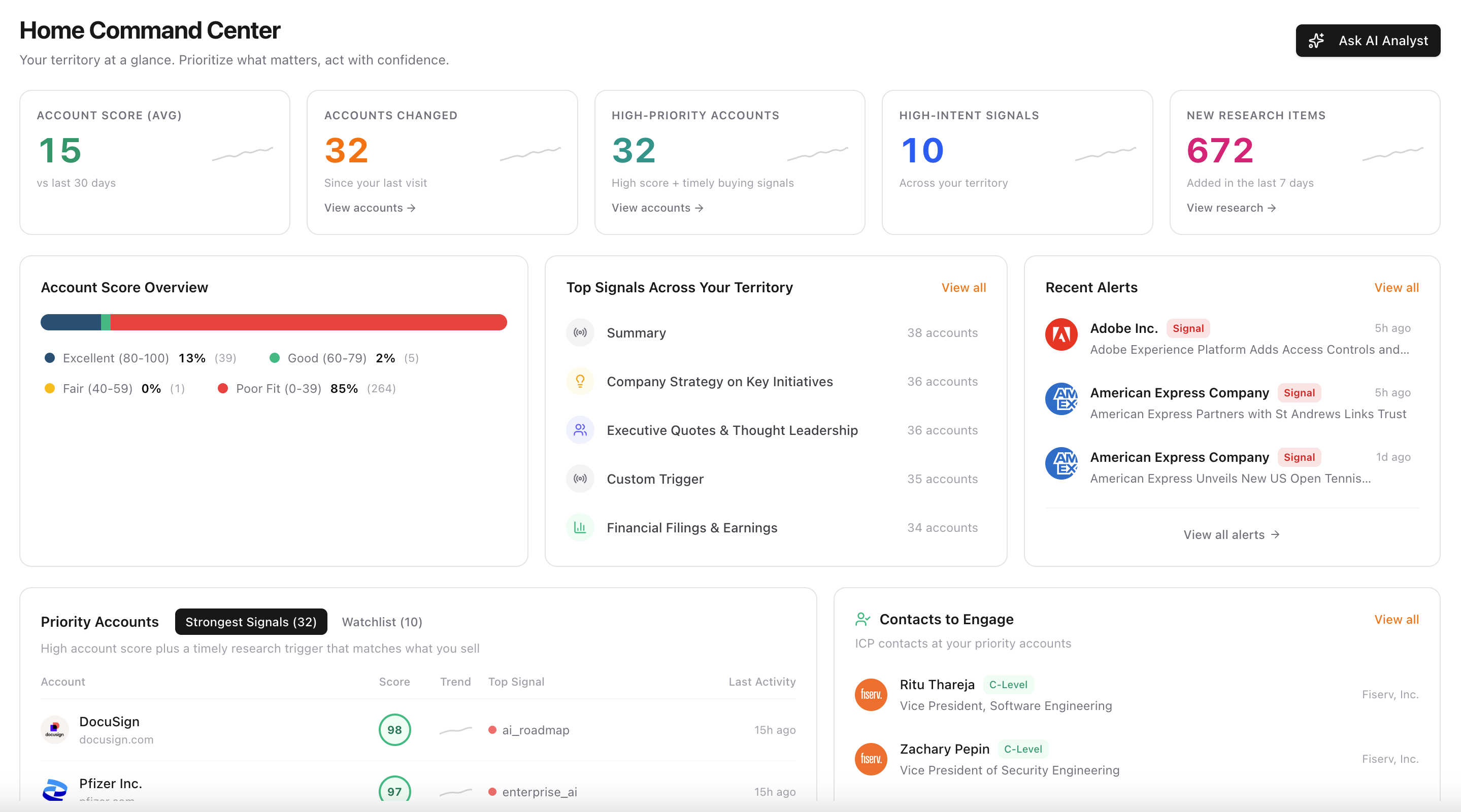
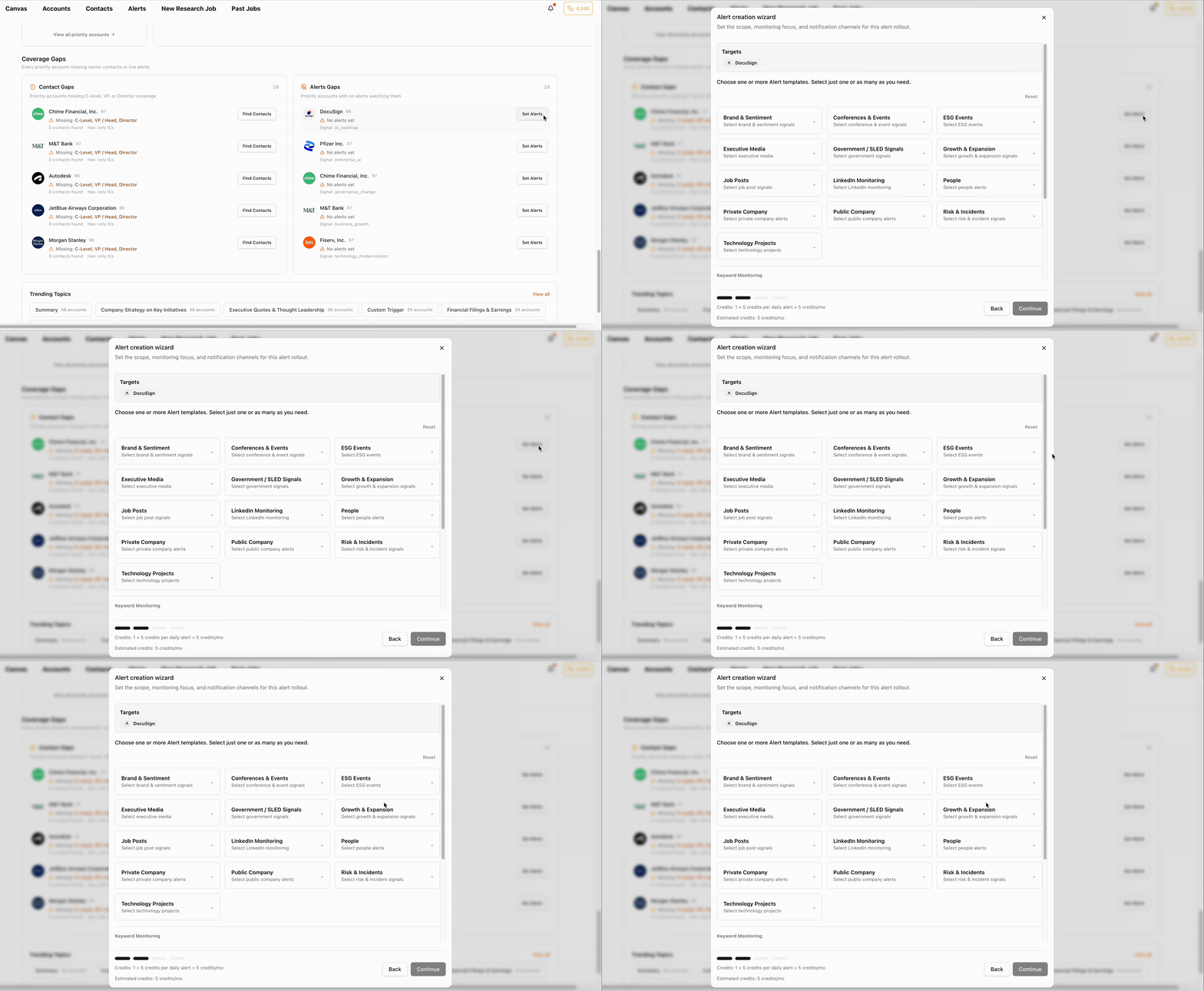
Context-aware alerts that keep accounts current. Set alerts once and the system monitors continuously. When something moves at an account, you know — with context about why it matters for your deal.
Deal materials from account context. AI Analyst generates shareable content — landing pages, org charts, briefs, and outreach — grounded in the research and contacts ChatAE already maintains.
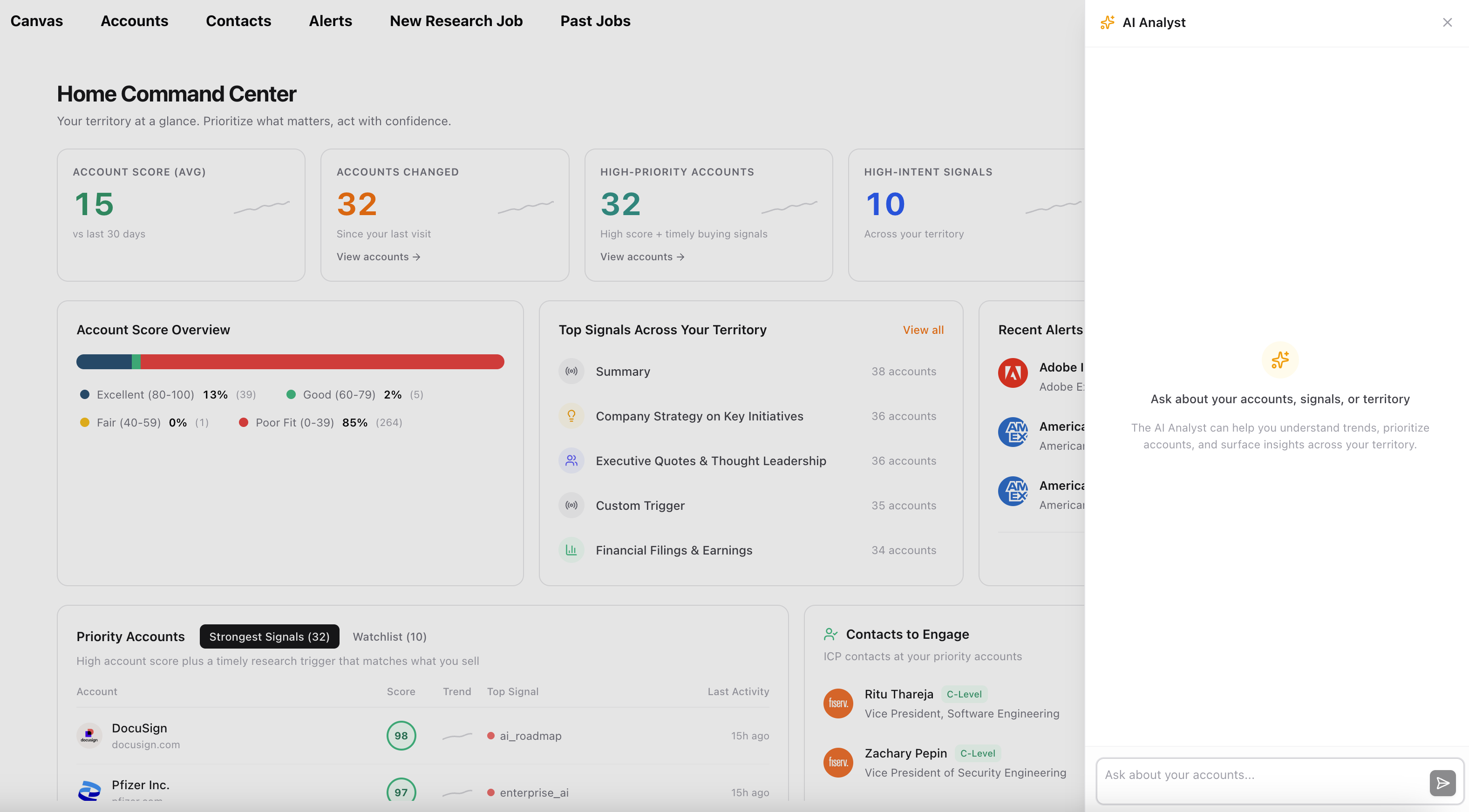
Prompt-Light by Design
Enterprise AEs don't have time to engineer prompts or configure workflows. ChatAE is designed to work with minimal input:
- Tell it what you sell, who you sell to, and what buying signals matter.
- It handles research, enrichment, monitoring, drafting, and prioritization from there.
- No workflow builders. No system prompts. No integration configuration.
You set your selling context once. The system operates from it. When you need a draft, a brief, or a material — the context is already loaded. You don't teach the system your deal every time you use it.
One System, Not Seven
Every capability connects because it was built as one system:
- Research feeds into call prep.
- Contact enrichment feeds into org charts.
- Alerts update the account context.
- Account context grounds every email draft.
- Signals drive daily prioritization.
- All of it serves reporting without separate work.
The AE is not the integration layer. The platform is.
The Bottom Line
AEs lose deal velocity to administrative work — account planning, stakeholder mapping, call prep, outreach writing, CRM updates, material generation, and internal reporting. Each task is synthesis: pulling together existing context and packaging it.
AI can automate the synthesis layer. But only if the system is integrated, maintains context continuously, and keeps the AE in control of strategy and relationships.
The answer is not seven point solutions that create a new integration problem. It's one platform that handles research, enrichment, monitoring, drafting, prioritization, and content generation as a connected system — designed for sellers, not power users.
That's what ChatAE is built for. Not to close deals. To give AEs the time to close them.